An Oscar Worthy Underscore
What’s in a score?
By Sarah Delehanty
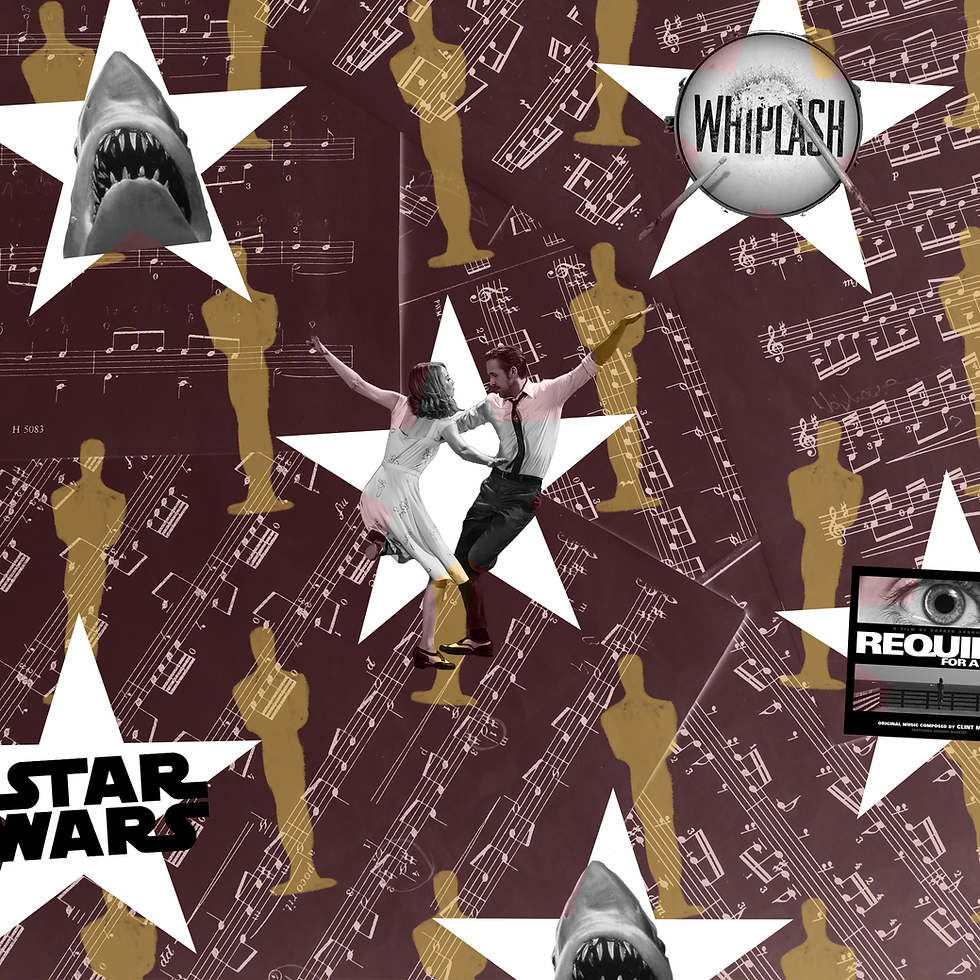
Graphic by Allie Lin
You don’t have to be a film fanatic to recognize the soundtracks that turn a movie into cinema. The song “Mia and Sebastian’s Theme” is recognizable from the first C sharp that Ryan Gosling plays. Whether or not you’re a Star Wars fan, you’ll know the movie from its triumphant fanfare or the daunting “Imperial March”. Of course, we cannot forget one of the most easily recognizable songs in film history: The Jaws theme. Once you hear the low growl of the piano’s first notes, you know a shark is lurking somewhere not too far beneath the surface. Though I appreciate all of these wonderful and identifiable Academy Award-winning scores, I want to direct your attention to some of the greatest scores in cinema and hopefully introduce you to some life-changing films along the way.
There are three scores we’ll look at that did not take home the Academy Award during their years of nomination: Requiem for a Dream (Clint Mansell), Whiplash (Justin Hurwitz), and Us (Michael Abels). One reason these life-changing scores may not have gotten the recognition I believe they deserve is because of the lack of a theme song. If you heard “No Two Words” from Whiplash, I doubt you’d be able to identify the film. I certainly don’t think I could. With La La Land, Star Wars, and Jaws, audiences can recognize the film by their first note. The score contains a theme. However, I’d argue that a theme isn’t what makes a score great. It may be what makes a film into a million dollar franchise, but that is not the point of film. The point of film is to be moved. I believe that this is why Requiem, Whiplash, and Us don’t get their deserved recognition for score, because in a time when we prioritize capital, we reward the things that increase that capital.
I also think that the three award-winning films I’ve referenced had more palatable, mainstream content than the other films I mentioned. Horror, musical, and blockbuster films with big names attached to them are destined to succeed. Today, we see the academy’s opinion being increasingly swayed by the public, and incredible films suffer because of this. I do not intend to discredit the work that was done on the award-winning films; I applaud their achievements. I simply urge you to give the “losers” a chance.
Comments